
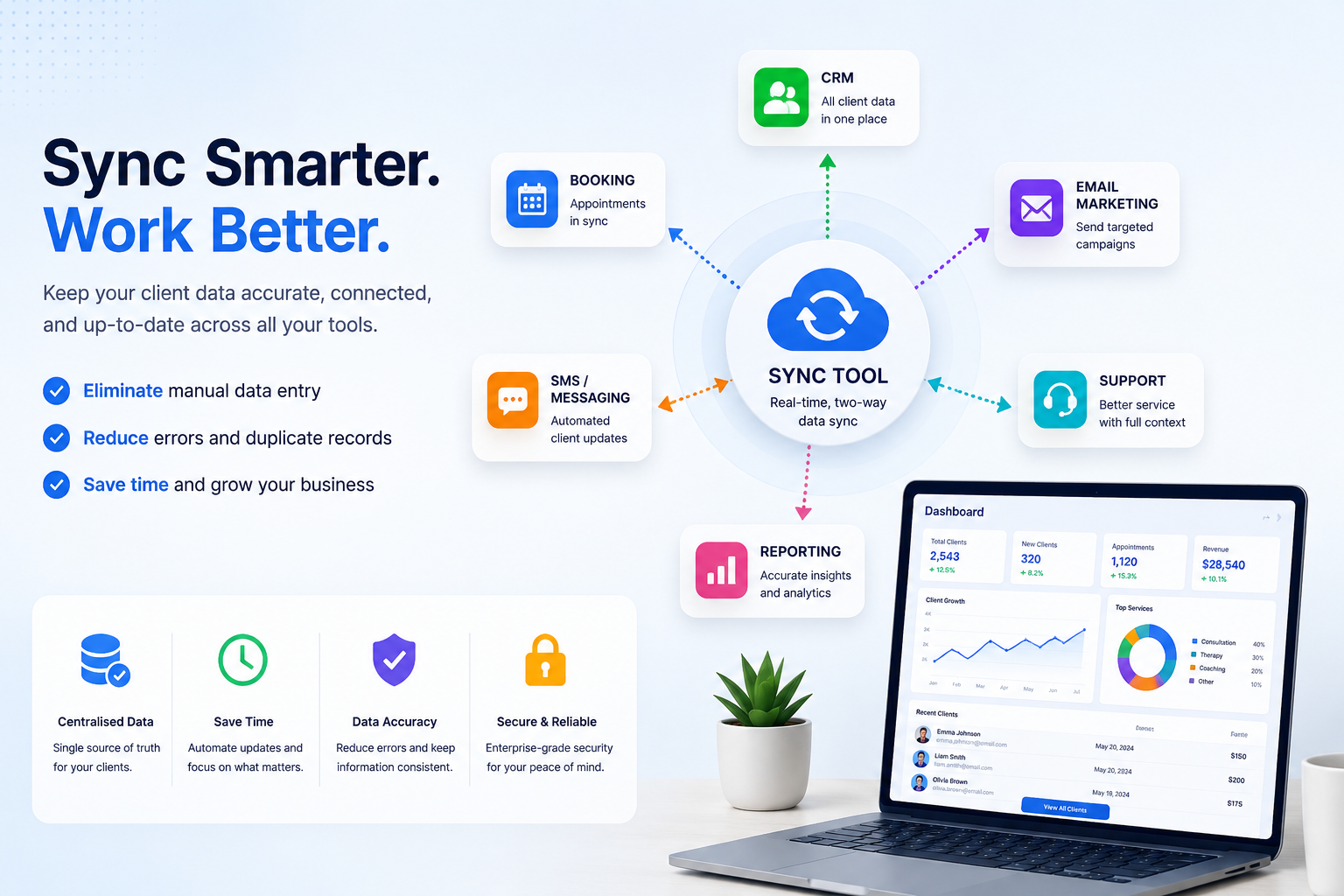
In today’s digital business environment, companies often use multiple software platforms to manage customer relationships, sales, marketing, appointments, and support services. Without a reliable synchronisation tool, client information can become scattered across different systems, leading to duplicate records, data inconsistencies, and wasted administrative time. A sync tool automatically connects these platforms, ensuring that customer information remains accurate, up-to-date, and accessible across the entire organisation.
One of the biggest advantages of using a data synchronisation solution is improved operational efficiency. When client information is updated in one system, those changes are automatically reflected across all connected applications. This eliminates the need for manual data entry, reduces human error, and allows staff to focus on delivering better customer service rather than managing spreadsheets and databases. Businesses can also automate workflows, notifications, and reporting processes, creating a more streamlined and productive working environment.
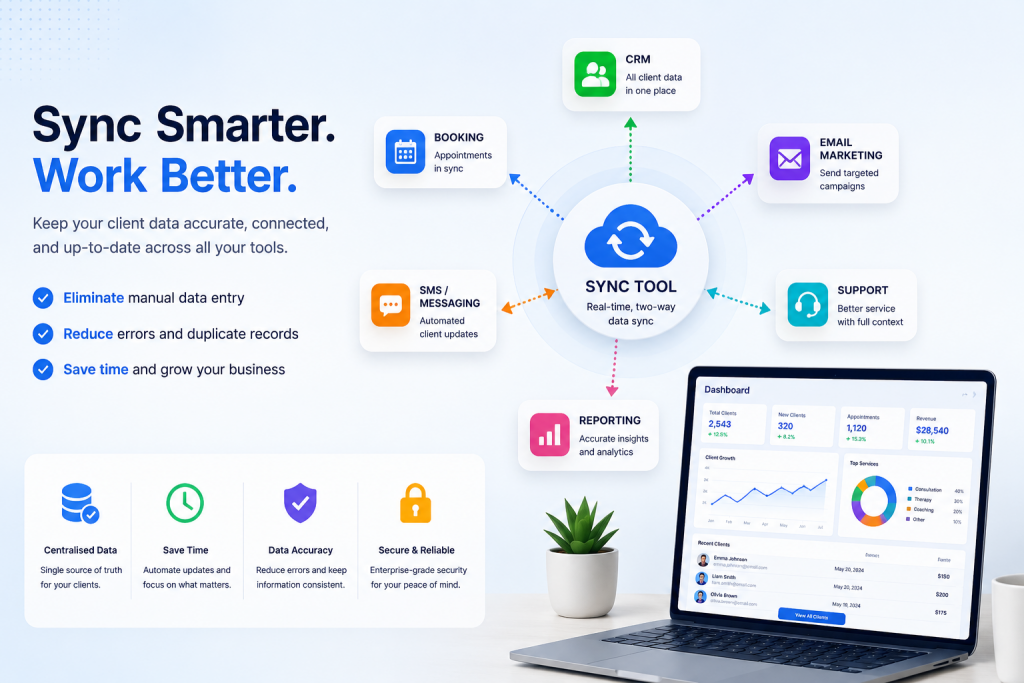
Data synchronisation tools also enhance customer experience and support business growth. Teams gain a complete view of each client’s interactions, purchases, appointments, and communication history, enabling more personalised and informed service. Whether integrating CRM systems, marketing platforms, booking software, or accounting applications, a robust sync solution ensures that every department works from the same accurate information. This leads to stronger customer relationships, better decision-making, and a scalable foundation for future business expansion.
Leave a Reply